How Big Are Waves in the Mentawai Islands? Size by Season
On this page
- How big are waves in Mentawai Islands surf spots through the year?
- When are the biggest waves in the Mentawai Islands?
- Where Mentawai swell comes from
- Why size varies so much between breaks
- Mentawai surf wave size and your ability
- Choosing a base for the size you want
- Mentawai wave size by month: what to pack
- Quick facts
- Frequently asked questions
- Plan around the waves you want
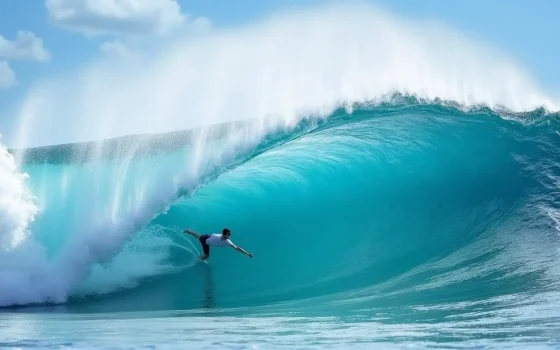
How big are waves in Mentawai Islands surf spots? In the dry season (April–October) the main reefs are commonly head-high to double overhead, about 1.5–3 m faces, with the biggest swells usually from mid-June to early August. From November to March, waist- to head-high surf is more typical, with occasional overhead days. Size varies a lot by break.
Wave size is the question behind almost every Mentawai trip decision: which month to go, which boards to pack, which resort or boat suits your level. The honest answer is that size depends on season, swell, tide and, above all, the individual reef. This guide explains how big waves in the Mentawai Islands typically get through the year, where the swell comes from, why two breaks a few kilometres apart can be wildly different sizes, and how to match all of that to your ability.
How big are waves in Mentawai Islands surf spots through the year?
The Mentawais are known for being consistent rather than flat. Even outside the main season, there is usually something rideable. The table below gives a broad guide to typical wave-face size by period. These are surf-face estimates drawn from forecasters and operators, not buoy measurements, and they describe the main exposed reefs rather than every break.
| Period | Typical face size | What to expect |
|---|---|---|
| November–March (wet season) | Often waist- to head-high, about 0.8–1.8 m, occasional overhead | Smaller, less consistent swell; some sheltered passes still offshore and fun |
| April | Often head-high to overhead | Transitional; early-season swells can arrive |
| May–June | Commonly head-high to a few feet overhead, about 4–8 ft | Consistency building; June often close to peak quality |
| Mid-June to early August | Commonly overhead to double overhead, about 5–10 ft at many breaks | Biggest and most reliable swells of the year |
| Late August–September | Commonly 4–8 ft, occasional 10 ft-plus | Still strong; slightly less consistent; crowds thinning |
| October | Often head-high to overhead | Transitional; size generally declines toward November |
For month-specific detail, see our guides to Mentawai surf in July and September.
When are the biggest waves in the Mentawai Islands?
The largest and most dependable swells usually arrive from mid-June through early August, during the Southern Hemisphere winter. That said, significant swells can hit in April, May, September and October too. A single strong storm in the southern Indian Ocean can produce a big week outside the peak window, and a quiet storm track can produce a softer week inside it.
Where Mentawai swell comes from
The main swells are generated by low-pressure systems in the southern Indian Ocean, along a storm track that stretches toward Antarctic latitudes. That is why you often hear them called “Southern Ocean” swells. These storms send long-period groundswell north-east across open ocean, and the Mentawai chain, lying off the west coast of Sumatra, is directly in the way.
Direction matters. Many of the best breaks are oriented to south-west to south-south-west swell. Long swell periods, roughly 14 seconds and above, carry more energy and generally produce the most powerful surf. When you look at a forecast, period tells you nearly as much as height. Our Mentawai surf forecast guide explains how to read the numbers.
Why size varies so much between breaks
Two reefs a short boat ride apart can be completely different sizes on the same morning. Four things drive that:
- Exposure: West- and south-west-facing reefs that sit open to the swell, such as Bank Vaults, receive most of the incoming energy. Bank Vaults is often described as handling surf up to triple overhead in big swells.
- Shadowing and refraction: Islands block and bend swell. Sheltered passes and reefs tucked behind headlands can be much smaller than exposed breaks during the same swell.
- Reef shape: Steep reefs that rise quickly from deep water can focus and amplify a swell, producing faces larger than the open-ocean reading. Gentler reefs spread the energy out.
- Tide: On many shallow reefs, tide changes how a wave breaks and how dangerous it is, even when the swell size stays the same.
This is why the Mentawais suit so many surfers at once. On a big day, advanced surfers can head to an exposed reef while intermediates find a smaller, more sheltered option nearby.
Mentawai surf wave size and your ability
| Surfer level | Comfortable size | Best months to consider |
|---|---|---|
| Beginner / improver | Small, soft waves at sheltered or deeper reefs | Wet season or shoulder months, with an operator that has gentle waves nearby |
| Intermediate | Head-high to a little overhead at forgiving reefs | April–May, September–October, or peak months with a flexible operator |
| Advanced | Overhead to double overhead on powerful reefs | May–September |
| Expert | Double overhead and bigger at heavy, exposed reefs | Mid-June to early August |
Be honest with yourself and with your operator. Mentawai reefs are shallow, and a wave that looks fun from the boat can break hard over coral. Read our guide on whether Mentawai surfing is safe before you pick dates.
Choosing a base for the size you want
The base you choose decides which waves you can reach each day. A land base close to breaks of different exposure gives you options when the swell jumps or drops. If you want a relaxed, social base with shared boats and guiding, see our overview of the Mentawai surf camp style of stay. If you are looking for coaching, rest and a gentler pace that suits mid-sized waves, a Mentawai surf retreat format may suit you better.
Mentawai wave size by month: what to pack
- Wet season: Your daily shortboard plus a fuller board for small days.
- Shoulder months: Daily shortboard, a step-up and a spare.
- Peak season: Daily shortboard, at least one step-up, and for experts a longer gun-style board for the biggest days.
Quick facts
- Dry season (about April–October): commonly head-high to double overhead, roughly 1.5–3 m faces
- Wet season (about November–March): often waist- to head-high, occasional overhead
- Biggest swells: usually mid-June to early August
- Swell source: southern Indian Ocean storms, mostly from the south-west
- Size varies hugely by break; exposed reefs are much bigger than sheltered passes
- Forecast tip: check swell period and direction as well as height
Frequently asked questions
How big are the waves in the Mentawais in peak season?
Many breaks are commonly overhead to double overhead from mid-June to early August, around 5–10 ft faces, with exposed reefs bigger on strong swells.
Are there small waves in the Mentawais?
Yes. Sheltered breaks and deeper reefs can be much smaller than exposed reefs, and the wet season typically brings waist- to head-high surf.
Which month has the biggest Mentawai waves?
July is usually the peak, within a mid-June to early August window, though big swells can arrive anywhere from April to October.
Is the forecast height the same as the wave size?
No. Forecast heights describe open-ocean swell. Actual face size depends on period, direction, tide and the reef, and can be larger or smaller.
What size waves suit intermediate surfers in the Mentawais?
Head-high to slightly overhead at forgiving reefs is a good range. Choose an operator with a spread of breaks so you can avoid the biggest days.
Plan around the waves you want
We are an independent planning guide to Mentawai surfing and do not own resorts or boats. Tell us the size of waves you want to ride and your travel window, and we will help you choose a month and a base and connect you with suitable operators. WhatsApp +62 811 3941 4563 or email bd@juaraholding.com.